
Autonomous Mobile Robots (AMRs) are transforming industrial automation across warehouses, factories, construction sites, and outdoor logistics operations.
However, not all AMRs are designed for the same environment.
Some robots are optimized for controlled indoor spaces such as warehouses and manufacturing facilities, while others are specifically engineered for rugged outdoor environments with uneven terrain and changing weather conditions.
Understanding the differences between Indoor and Outdoor AMRs is essential for selecting the right robotic solution for industrial operations.
—
## What Are Indoor AMRs?
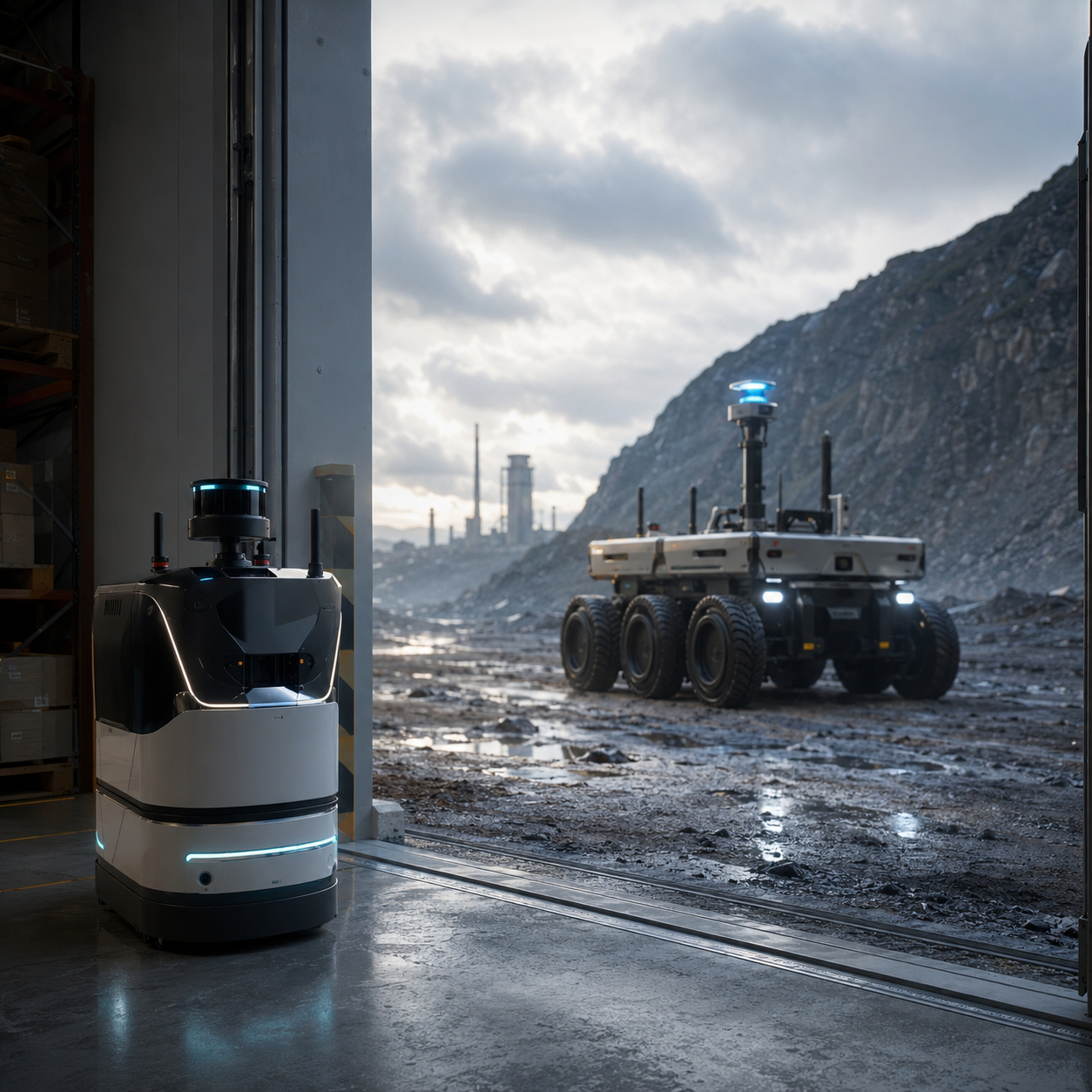
Indoor AMRs are autonomous mobile robots designed to operate inside controlled environments.
They are commonly used in:
* Warehouses
* Manufacturing plants
* Distribution centers
* Hospitals
* E-commerce fulfillment centers
Indoor AMRs typically move on smooth floors and navigate within structured layouts.
Their main tasks include:
* Material transportation
* Order picking
* Pallet movement
* Inventory handling
* Production line support
—
## Features of Indoor AMRs
Indoor autonomous robots usually include:
* Compact design
* Precision LiDAR navigation
* SLAM mapping technology
* Obstacle avoidance systems
* High maneuverability
* Integration with WMS and ERP systems
Because indoor environments are more predictable, these robots can achieve very high navigation accuracy and operational efficiency.
—
## What Are Outdoor AMRs?
Outdoor AMRs are designed for open industrial environments and rugged terrain conditions.
These robots are commonly used in:
* Construction sites
* Mining operations
* Ports and logistics yards
* Agricultural facilities
* Energy and utility industries
Outdoor AMRs must handle much more complex operating conditions compared to indoor robots.
—
## Features of Outdoor AMRs
Outdoor AMRs are equipped with technologies specifically designed for challenging environments, including:
* Large all-terrain wheels
* Rugged chassis construction
* Weather-resistant protection
* GPS and RTK positioning
* Advanced terrain navigation
* Heavy-duty suspension systems
* High-powered motors
These robots can safely navigate dirt roads, gravel, slopes, mud, and uneven industrial surfaces.
—
## Navigation Differences
### Indoor Navigation
Indoor AMRs primarily rely on:
* LiDAR sensors
* SLAM mapping
* QR codes or markers
* Cameras
* Indoor localization systems
Because the environment is controlled, navigation is generally more stable and predictable.
—
### Outdoor Navigation
Outdoor AMRs require additional technologies because GPS signals, terrain conditions, and environmental changes create more complexity.
Outdoor robots often use:
* GPS positioning
* RTK navigation
* AI-based terrain analysis
* Multi-sensor fusion
* Outdoor LiDAR systems
The robot must continuously adapt to changing conditions in real time.
—
## Environmental Challenges
### Indoor Challenges
Indoor robots mainly deal with:
* Human traffic
* Warehouse obstacles
* Dynamic inventory layouts
* Narrow aisles
These environments are relatively stable compared to outdoor operations.
—
### Outdoor Challenges
Outdoor AMRs face significantly harsher conditions, including:
* Rain and snow
* Dust and mud
* Uneven terrain
* Poor visibility
* Temperature changes
* Large open environments
This requires stronger hardware and more advanced autonomous software systems.
—
## Payload and Durability
Outdoor AMRs are usually larger and more durable than indoor robots.
They are built to transport:
* Heavy construction materials
* Industrial equipment
* Outdoor cargo
* Mining supplies
Indoor AMRs, on the other hand, are often optimized for speed, agility, and compact movement inside facilities.
—
## Which One Is Right for Your Business?
The ideal AMR depends entirely on the operational environment and business requirements.
Indoor AMRs are ideal for:
* Warehouses
* Smart factories
* Retail logistics
* Manufacturing automation
[6/3/2026 3:07 PM] 𝐀𝐑𝐌𝐀𝐍: Outdoor AMRs are better suited for:
* Construction projects
* Mining facilities
* Ports
* Agriculture
* Heavy industrial operations
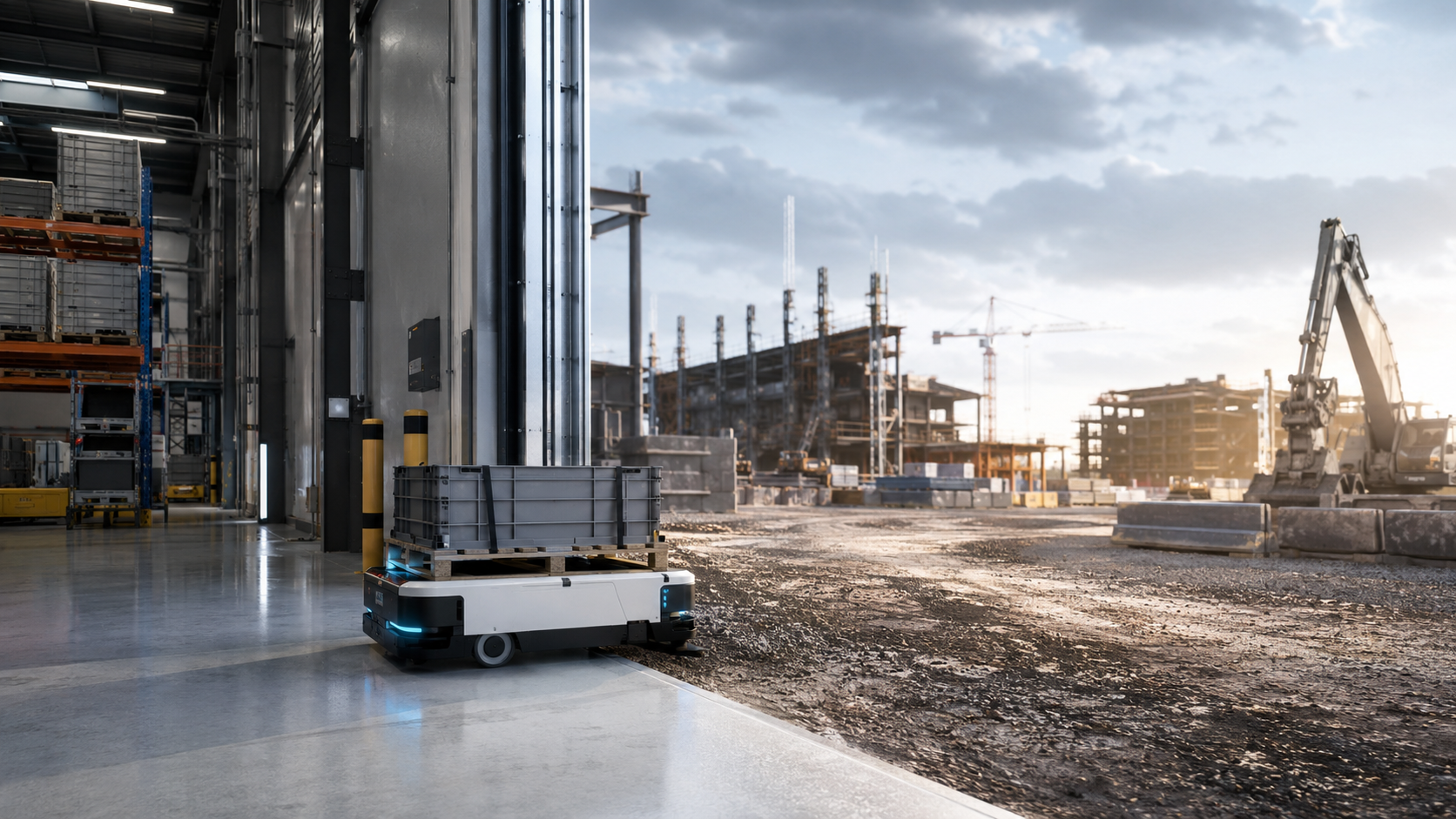
Some advanced companies even combine both systems to create fully connected indoor and outdoor logistics automation.
—
## The Future of Autonomous Mobile Robotics
As AI and autonomous navigation technologies continue to improve, the gap between indoor and outdoor robotics is becoming smaller.
Future AMRs are expected to feature:
* Smarter navigation systems
* Better terrain adaptation
* Improved battery technology
* Greater autonomy
* Seamless indoor-outdoor transitions
These innovations will further expand the role of AMRs in industrial automation worldwide.