
As warehouses and industrial facilities become more automated, companies are no longer using just one autonomous mobile robot. Modern operations often deploy entire fleets of AMRs working together simultaneously.
Managing multiple robots efficiently requires advanced fleet management software capable of coordinating tasks, optimizing traffic flow, preventing congestion, and maximizing operational productivity.
AMR Fleet Management is the technology that allows dozens or even hundreds of autonomous robots to operate together safely and intelligently inside industrial environments.
What Is AMR Fleet Management?
AMR Fleet Management is a centralized software system that controls and coordinates multiple autonomous mobile robots within the same facility.
The system continuously monitors:
Robot locations
Battery levels
Traffic conditions
Task priorities
Charging schedules
Navigation routes
This enables all robots to work together efficiently without collisions or operational conflicts.
How Multiple AMRs Coordinate Tasks
Fleet management software automatically assigns tasks to the most suitable robot based on:
Distance to the task
Current workload
Battery status
Traffic conditions
Robot capabilities
For example, if one robot is already busy or low on battery, the system can instantly assign the job to another available AMR.
This dynamic task allocation improves warehouse efficiency and reduces downtime.
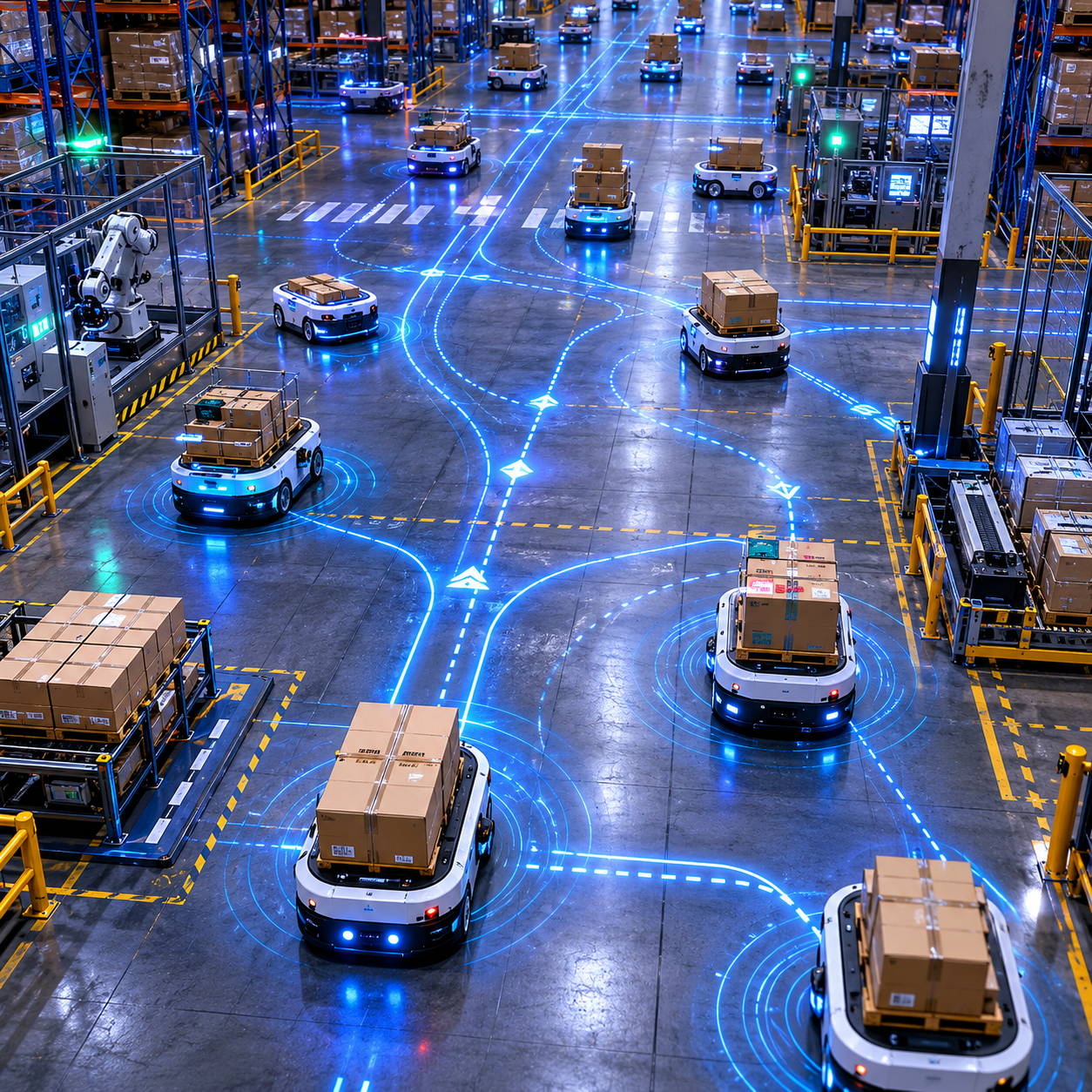
Traffic Management and Collision Prevention
One of the biggest challenges in multi-robot environments is traffic control.
Fleet management systems create intelligent traffic coordination by:
Monitoring robot movement in real time
Preventing route conflicts
Managing intersections
Optimizing robot spacing
Reducing congestion
If several robots approach the same area simultaneously, the system automatically adjusts routes and movement priorities.
This ensures safe and smooth warehouse operations.
Intelligent Route Optimization
Modern AMR fleet systems continuously optimize navigation routes based on real-time warehouse conditions.
The software can:
Avoid congested areas
Recalculate routes instantly
Reduce unnecessary travel distance
Improve delivery speed
Balance robot workloads
As warehouse activity changes throughout the day, the fleet management system adapts automatically.
Battery and Charging Management
Efficient charging coordination is critical for large AMR fleets.
Fleet management software monitors battery levels and automatically schedules charging times without interrupting operations.
This prevents:
Unexpected shutdowns
Charging station congestion
Operational delays
Some advanced systems even prioritize charging based on workload demand and production schedules.
Integration with Warehouse Systems
Modern AMR fleet platforms can integrate with:
Warehouse Management Systems (WMS)
ERP software
Manufacturing Execution Systems (MES)
Inventory management platforms
This allows robots to receive tasks automatically based on warehouse operations and production requirements.
Integrated automation creates a fully connected smart warehouse ecosystem.
Scalability Advantages
One of the biggest benefits of AMR fleet management is scalability.
Companies can start with a small number of robots and gradually expand operations as demand grows.
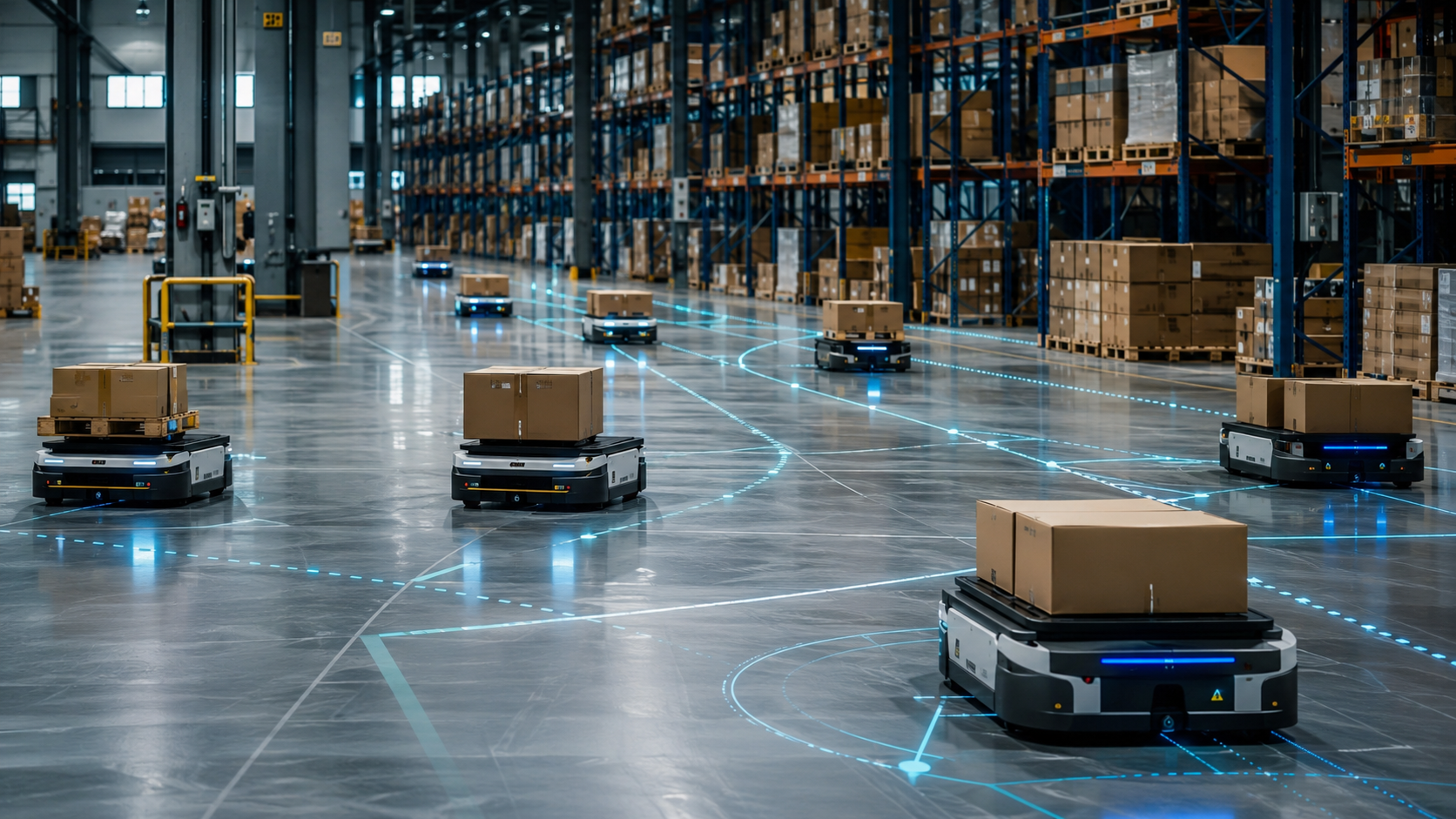
The fleet management software can coordinate:
5 robots
50 robots
Or even hundreds of autonomous units simultaneously
Without requiring major infrastructure changes.
Industries Using AMR Fleet Management
AMR fleet systems are widely used in:
E-commerce fulfillment centers
Manufacturing facilities
Automotive production plants
Electronics factories
Pharmaceutical warehouses
Logistics hubs
These industries rely on coordinated robotic automation to handle large-scale material transportation efficiently.
Benefits of AMR Fleet Management
Businesses adopt fleet management systems because they provide:
[6/3/2026 3:08 PM] 𝐀𝐑𝐌𝐀𝐍: Higher operational efficiency
Better traffic coordination
Reduced labor dependency
Improved warehouse safety
Faster material transportation
Scalable automation
Real-time operational visibility
The ability to coordinate multiple robots intelligently significantly improves warehouse productivity.
The Future of Multi-Robot Automation
As AI and industrial automation technologies continue evolving, AMR fleets are becoming smarter and more autonomous.
Future systems may include:
AI-driven predictive traffic management
Fully autonomous warehouse orchestration
Swarm robotics coordination
Self-learning navigation systems
Cloud-based fleet optimization
These innovations will continue transforming industrial logistics and warehouse automation.
Conclusion
AMR Fleet Management enables multiple autonomous robots to work together efficiently, safely, and intelligently inside modern industrial environments.
By coordinating navigation, task allocation, charging, and traffic management, fleet management software helps businesses achieve scalable and highly optimized automation.
As warehouses continue moving toward Industry 4.0, intelligent multi-robot coordination will become a key foundation of next-generation logistics operations